Introduction
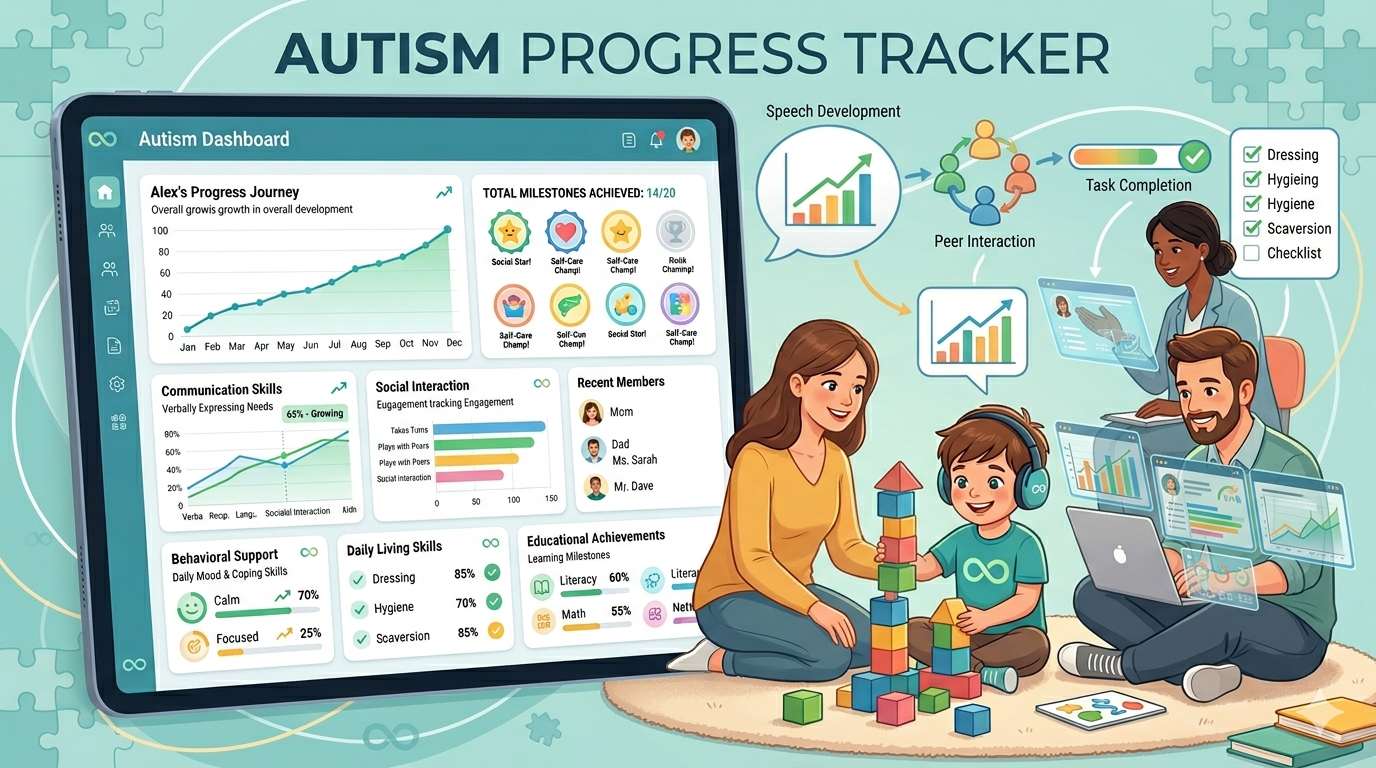
Tracking progress is an important part of supporting children and individuals with Autism Spectrum Disorder (ASD). An Autism Progress Tracker helps parents, caregivers, teachers, and therapists monitor developmental milestones, communication skills, social interactions, behavior patterns, and daily achievements.
By recording progress regularly, families can better understand strengths, identify areas that need support, and celebrate improvements over time.
What Is an Autism Progress Tracker?
An Autism Progress Tracker is a tool designed to record and monitor the development of individuals with autism. It helps collect information about various aspects of growth, including:
- Communication skills
- Social interactions
- Behavioral improvements
- Daily living skills
- Emotional regulation
- Educational progress
- Therapy outcomes
The tracker provides valuable insights that can help families and professionals make informed decisions about support strategies and interventions.
Why Is an Autism Progress Tracker Important?
Children with autism often develop skills at different rates. Small improvements may not always be noticeable in daily life. A structured tracking system helps document these changes over time.
Benefits of Using an Autism Progress Tracker
1. Monitor Developmental Milestones
Track important milestones such as language development, social engagement, and independence skills.
2. Identify Patterns and Triggers
Recording behaviors can help identify triggers, environmental factors, and situations that affect progress.
3. Improve Communication with Professionals
Parents can share accurate data with therapists, teachers, and healthcare providers for better collaboration.
4. Measure Therapy Effectiveness
An Autism Progress Tracker helps evaluate whether specific therapies and interventions are producing positive results.
5. Celebrate Achievements
Recognizing progress, even small improvements, can motivate both children and caregivers.
Key Areas to Track
Communication Skills
Monitor:
- Vocabulary growth
- Sentence formation
- Eye contact
- Response to questions
- Non-verbal communication
Social Skills
Track:
- Interaction with peers
- Sharing and turn-taking
- Group participation
- Relationship building
- Understanding social cues
Behavioral Progress
Record:
- Emotional responses
- Repetitive behaviors
- Meltdowns
- Self-regulation skills
- Positive behavior improvements
Daily Living Skills
Monitor:
- Personal hygiene
- Dressing independently
- Eating habits
- Following routines
- Household responsibilities
Academic Development
Track:
- Reading skills
- Writing progress
- Attention span
- Classroom participation
- Learning achievements
How to Use an Autism Progress Tracker Effectively
Set Clear Goals
Start with specific and measurable objectives. For example:
- Make eye contact during conversations.
- Use five new words each week.
- Complete daily tasks independently.
Record Data Consistently
Update the tracker daily or weekly to maintain accurate records.
Use Simple Ratings
Consider using:
- Completed
- Partially Completed
- Needs Improvement
Or use a rating scale from 1 to 5.
Review Progress Regularly
Analyze records monthly to identify improvements and areas requiring additional support.
Involve the Support Team
Share progress reports with therapists, teachers, and family members to ensure everyone is working toward the same goals.
Features of a Good Autism Progress Tracker
- Easy-to-use dashboard
- Goal-setting features
- Behavior tracking tools
- Communication milestone records
- Progress reports and analytics
- Daily activity logs
- Secure data storage
- Multi-user access for caregivers and therapists
Digital Autism Progress Trackers vs Paper Tracking
Digital Autism Progress Tracker
Advantages:
- Easy data entry
- Automatic reports
- Progress charts
- Accessible from multiple devices
- Secure record storage
Paper-Based Tracker
Advantages:
- Simple to use
- No technology required
- Flexible customization
Many families prefer digital autism progress trackers because they provide visual reports and long-term progress analysis.
Common Challenges When Tracking Autism Progress
Some families may face challenges such as:
- Inconsistent data entry
- Unrealistic expectations
- Tracking too many goals at once
- Difficulty interpreting results
To overcome these challenges, focus on a few key goals and maintain a consistent tracking routine.
Tips for Parents and Caregivers
- Track progress regularly.
- Focus on strengths as well as challenges.
- Celebrate small achievements.
- Stay patient and consistent.
- Use data to guide support strategies.
- Collaborate with therapists and educators.
Conclusion
An Autism Progress Tracker is a valuable tool for monitoring development, measuring progress, and supporting individuals with autism. Whether used by parents, caregivers, teachers, or therapists, it provides meaningful insights that help create personalized support plans and improve outcomes.
By consistently tracking communication, behavior, social skills, and daily activities, families can better understand growth patterns and ensure that every achievement is recognized and supported.
FAQ
What is an Autism Progress Tracker?
An Autism Progress Tracker is a tool used to monitor developmental milestones, behavior, communication, and daily living skills in individuals with autism.
Who can use an Autism Progress Tracker?
Parents, caregivers, therapists, educators, and healthcare professionals can use it to track and assess progress.
How often should autism progress be tracked?
Daily or weekly tracking is recommended for the most accurate results.
Can an Autism Progress Tracker improve therapy outcomes?
Yes. Regular tracking provides valuable data that helps professionals adjust therapy plans and measure effectiveness.